Where does it go?
Send the current plan and profile, proposed connection points, known existing services, survey information and access limits. Utility locates and field verification are project-specific controls, not assumptions from an old plan.
 Civil & Sitework
Northwest Arkansas contractor
Plan the trench before equipment arrives. Route, depth, access, existing services and restoration limits shape the excavation scope.
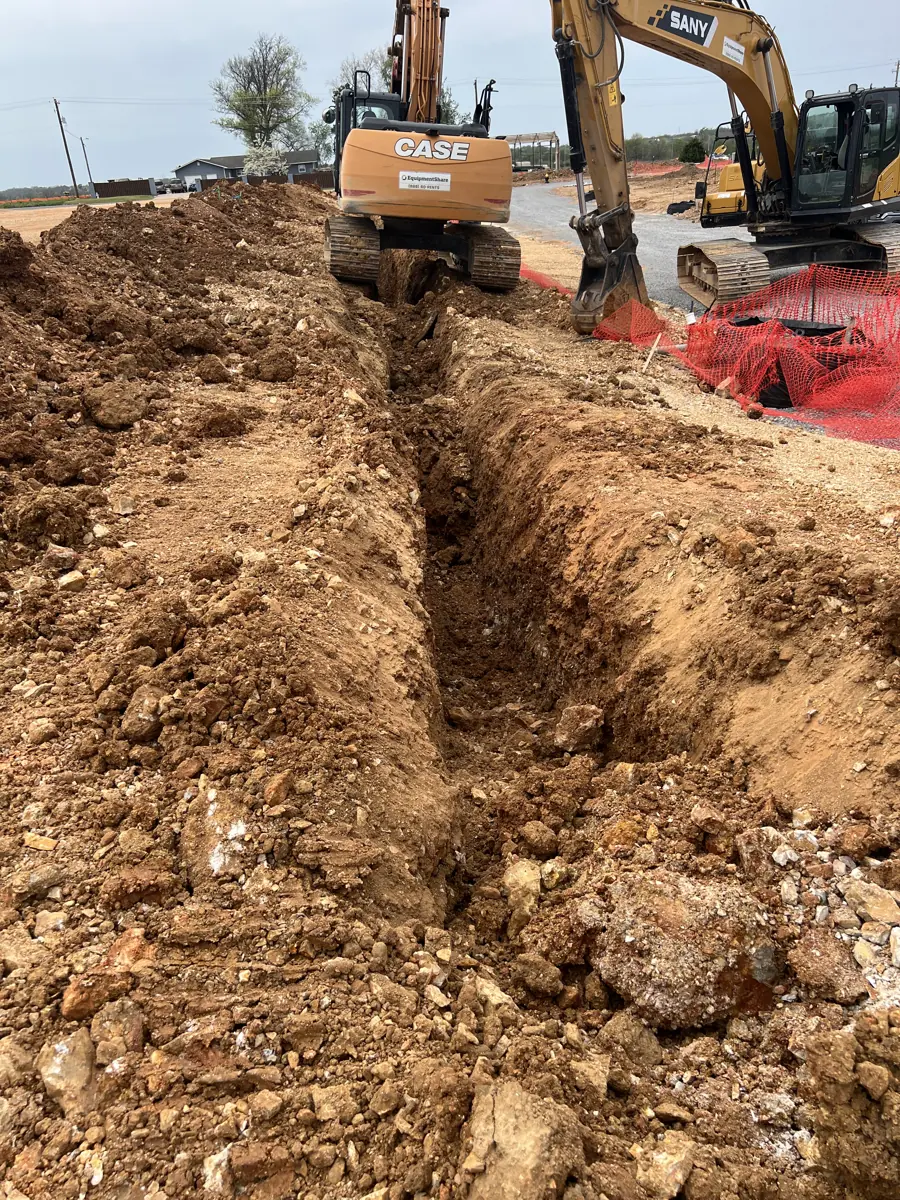
In the field
A closer look at the open trench and equipment access.
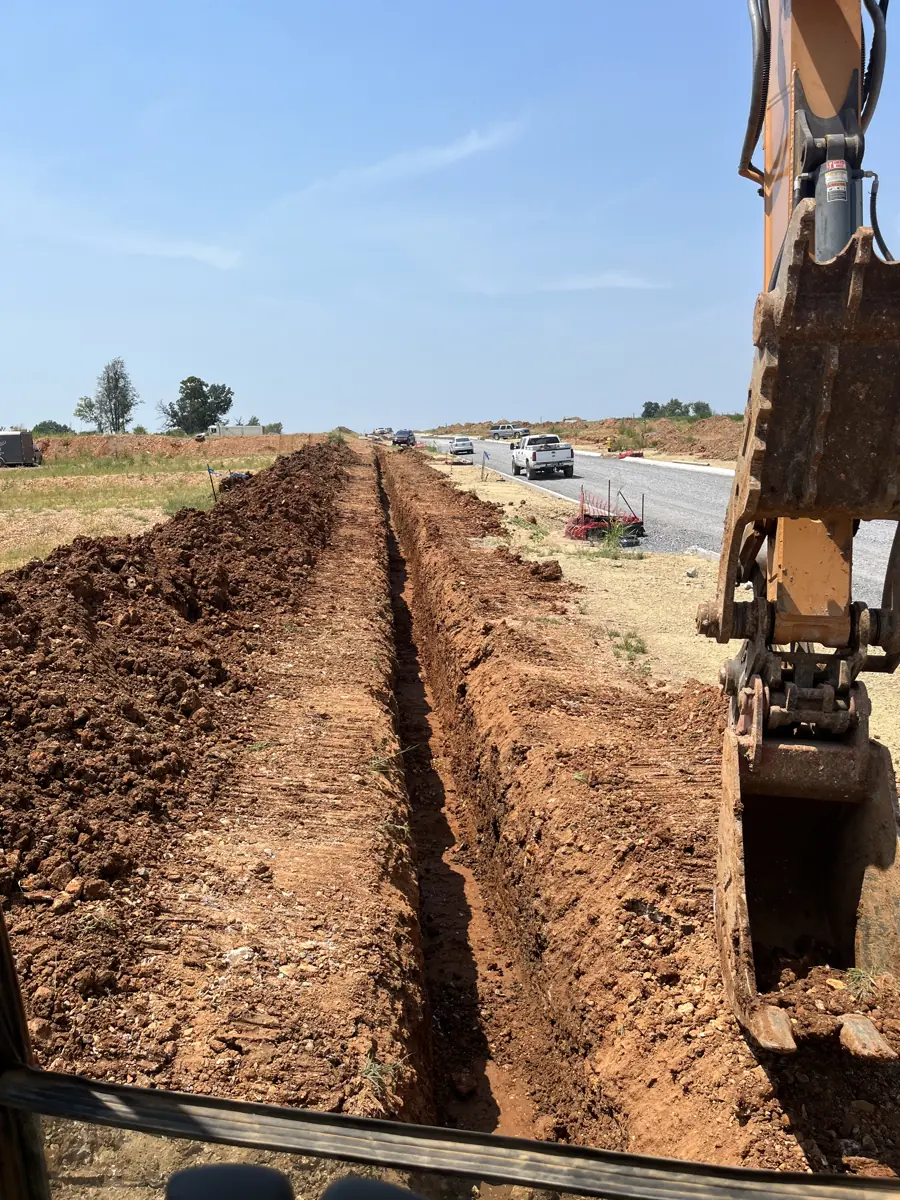
Open trench excavation in Bentonville, Arkansas.
Does the work fit?
Assign layout, permits, materials, licensed installation, tie-ins, shutdowns, backfill, testing and inspections in the project scope. Meyers' excavation and support work is defined by its proposal.
Utility excavation proof · Bentonville, Arkansas
Bentonville field photographs show trench excavation and the working room needed alongside it. They give owners and contractors a concrete starting point for discussing route, equipment access, spoil and backfill.
Before the trench is opened
The utility line is only one part of the job. The work also needs equipment access, a safe excavation route, known conflicts, material and installation responsibilities, backfill requirements, testing and a defined condition for the surrounding site. Those decisions should be settled together before a schedule or price is treated as firm.
Send the current plan and profile, proposed connection points, known existing services, survey information and access limits. Utility locates and field verification are project-specific controls, not assumptions from an old plan.
The proposal should name the parties responsible for permits, layout, excavation, materials, licensed installation, tie ins, shutdowns, inspection, testing and acceptance. Meyers' contractor-side support does not transfer design or utility-provider authority.
Define bedding, backfill, compaction criteria, surface repair, grading and records required at handoff. Restoration is not automatically included merely because a trench was excavated.
Common questions
Send the plan and profile if available, site address, proposed connection points, existing utility information, access restrictions, required testing and restoration, and the schedule. If a drawing is preliminary, identify the decisions still open.
The answer depends on the system, permits, required licenses and proposal. Meyers can review the excavation and defined support work. The proposal must identify who supplies licensed installation, tie-ins, inspections, testing and acceptance.
Treat the conflict as a field condition. Stop the affected work, verify the condition through the project's required locate and coordination process, and agree on a revised route or scope before proceeding. The proposal should say how changed conditions are handled.
Only to the condition specified in the contract. Surface repair, grading, stabilization, pavement and testing may require different crews and acceptance criteria. Define them before the trench is priced.
Continue the scope review
Keep soil, concrete and vegetative material distinct in the scope. Confirm onsite handling, offsite acceptance, haul access and the condition required by the next phase.
Construction & demolition material management · Use the planning checklist
From scope to a project review
Send the information available now. Meyers can review the excavation and support scope, responsibility boundaries and questions to resolve with the design team.
Send the location, plans or profiles if available, known connection requirements and schedule. You do not need every answer before contacting us.
Request a Project ReviewPrefer to discuss the unknowns first? Call (479) 249-7383.