 Civil & Sitework
Northwest Arkansas contractor
Hauling & Material Management
A hauling plan starts with the material, not a truck count. Define who loads it, where it can go, how trucks reach the work and what records the owner needs at the end.
Does the work fit?
What needs to be defined?
- Material type, estimated volume or weight and any separation requirements
- Who loads, stages and secures each material stream
- Truck access, operating hours, haul route and disposal destination
- Ticket, recycling or disposal documentation required by the project
The proposal should identify loading and disposal responsibilities, accepted material and measurement basis. Unknown or regulated material needs a separate classification and handling decision before a destination or price is assumed.
Documented project · Springdale
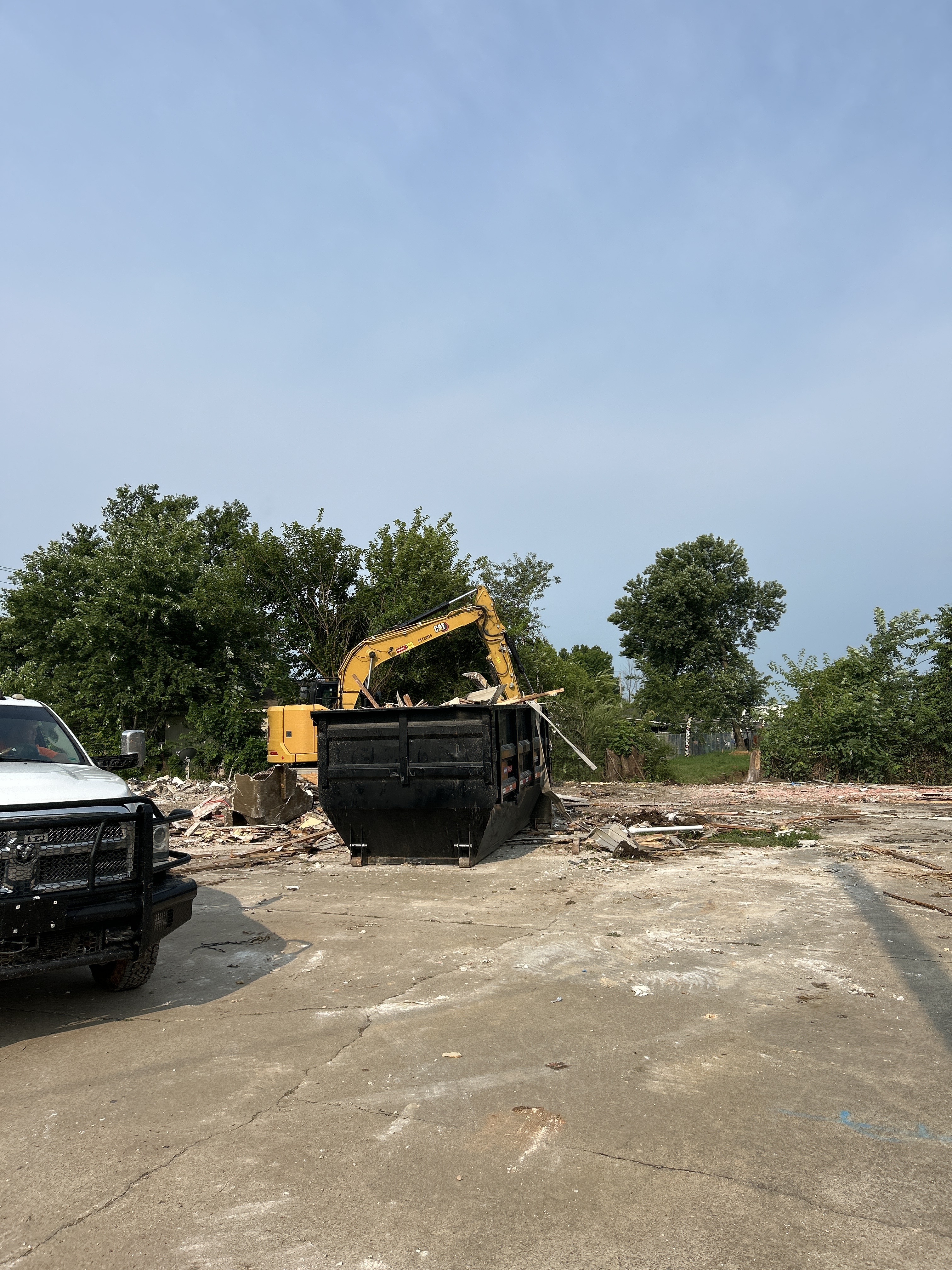
Material handling inside a real demolition sequence.
Sunset and Powell in Springdale included structure demolition, debris removal and disposal, below-grade removals, rough grading and specified stabilization. The example shows why loading, haul routes and disposal responsibilities should be defined with the work sequence.
See material handling in the Sunset and Powell project →Start with your site
What material needs moving, and who will load it?
Describe the material, estimated quantity, pickup location and whether the scope includes loading, export, import or disposal.
What could change the scope?
Material classification, loading access, truck routes, destination acceptance and weight or volume estimates affect the hauling plan. Do not assume a disposal destination will accept an unidentified material.
Common questions
What owners and contractors ask.
What information do you need to plan a haul?
Tell us what material is moving, where it is staged, the estimated amount, whether Meyers or another party loads it, truck access, schedule limits and the records the project needs. Photographs and available quantities help us identify what still needs checking.
Can hauling be priced separately from demolition?
Yes, when the material, loading responsibility, quantity basis, destination requirements and schedule are defined. A standalone haul should not silently include demolition, excavation, disposal of unknown material or site restoration.
How is the quantity measured?
The proposal should say whether the basis is loads, volume, weight or another agreed measure, and how tickets or receipts will be used. Loose, bank and compacted volumes are not interchangeable.
What if material cannot go to the planned destination?
Acceptance depends on the material and receiving facility. Unknown or regulated material requires classification and a separate handling decision before a destination or price is assumed. The proposal should state how a rejected load or changed condition will be resolved.
Continue the scope review
See the work, then define your next step.
Plan the material as part of the scope
Match the actual material and load to an accepted destination. Confirm load limits, dispatch, unloading access, tickets and any required recovery documentation.
Construction & demolition material management · Use the planning checklist
From scope to a project review
Let’s review your site.
Tell us what needs moving, even if quantities are preliminary. Meyers can review loading, destination and documentation questions before defining the hauling scope.
Send the pickup location, material description, photos or quantities if available and desired timing. You do not need every answer before contacting us.
Request a Project ReviewPrefer to discuss the unknowns first? Call (479) 249-7383.